

Top 5 AI-Driven Strategies for Rapid Business Growth
AI has made a ton of operational processes easy for businesses.
From content ideation, social media content generation, automations, workflows… you get the idea.
However, while these all sound amazing on the surface, there’s something even better underneath… AI is driving growth and innovation across every industry.
Effective implementations in customer service, streamlining operations, or whatever you’re looking to use AI for… it all can lead to the boosting of your bottom line.
Today, we’ll run through some specific use cases where AI is transforming various aspects of business—how it can help your business—and provide actionable insights to illustrate the potential of AI for rapid business growth.
1. Enhancing Customer Experience with AI
Personalization at Scale
Customer data flows in, like a massive river, and before AI, businesses would dedicate an entire data team to manage that flow, analyze it, and then draw a conclusion… formulating a story about the data.
Now, since we have a ready and capable partner in AI (who never sleeps or takes vacation btw), your business can analyze all of that data far more efficiently. With the saved time, your human team can take those insights and create personalized experiences for each customer, or sub-segment of your audience. Tools like recommendation engines, AI-powered chatbots, custom intent-based content, and more, can tailor interactions based on individual preferences, leading to higher engagement and better conversion rates.
For instance, Amazon's recommendation engine, which suggests products based on previous purchases and browsing history, significantly enhances the shopping experience. According to McKinsey, 35% of Amazon web sales were generated through their recommended items… Makes a good case to hop on the train!
AI-Powered Customer Support
One of the most important aspects of any business—now more than ever before—is the customer experience (CX). A key part of the CX is the customer service provided. Using AI with your customer support systems enables you to reap a ton of benefits, like 24/7 availability, and better response times. Chatbots and even AI-based virtual assistants tend to do a really good job at managing smaller tasks, and even some complex issues. Zendesk for example uses an AI to improve their customer service through chatbots, suggested inquiries, and even tailored responses while an individual waits to speak to a human. Over the longer-term, this has led to higher satisfaction and retention rates.
2. Optimizing Marketing Campaigns with AI
Data-Driven Marketing Insights
AI will always be great at looking for the actionable insights buried deep amidst the river of data. With the value of those insights, and the time saved, your business can adjust any and all strategies that are data-dependent.
One of our favorites?
The marketing strategy.
Tools such as Google Analytics or HubSpot use AI to offer a deeper understanding of general performance of marketing campaigns, user behaviors, and market trends. Coca-Cola has recently used AI in their “Create Real Magic” campaign which boosted net revenue by 5% at the end of Q1 in 2023 (when the campaign was introduced) and delivered a 6% increase in net revenue at the end of Q2 2023.
Predictive Analytics
While we could just toss out the data after each use, it’s probably best we actually try and glean more value from it. One way to do so is to apply predictive analytics. AI enables predictive analytics to be more efficient, and relatively spot-on with reliability and accuracy.
First, the algorithm will analyze your historical data. Next, it’ll forecast future actions for you. From there, your business benefits from making better decisions. Netflix consistently uses predictive analytics to recommend your next favorite movie or show based on your viewing history alone. How many times did they get it right? Probably a bunch, which is highlighted when the company reported that their proprietary recommendation engine produces $1B per year in value via customer retention.
3. Streamlining Operations and Reducing Costs
AI in Supply Chain Management
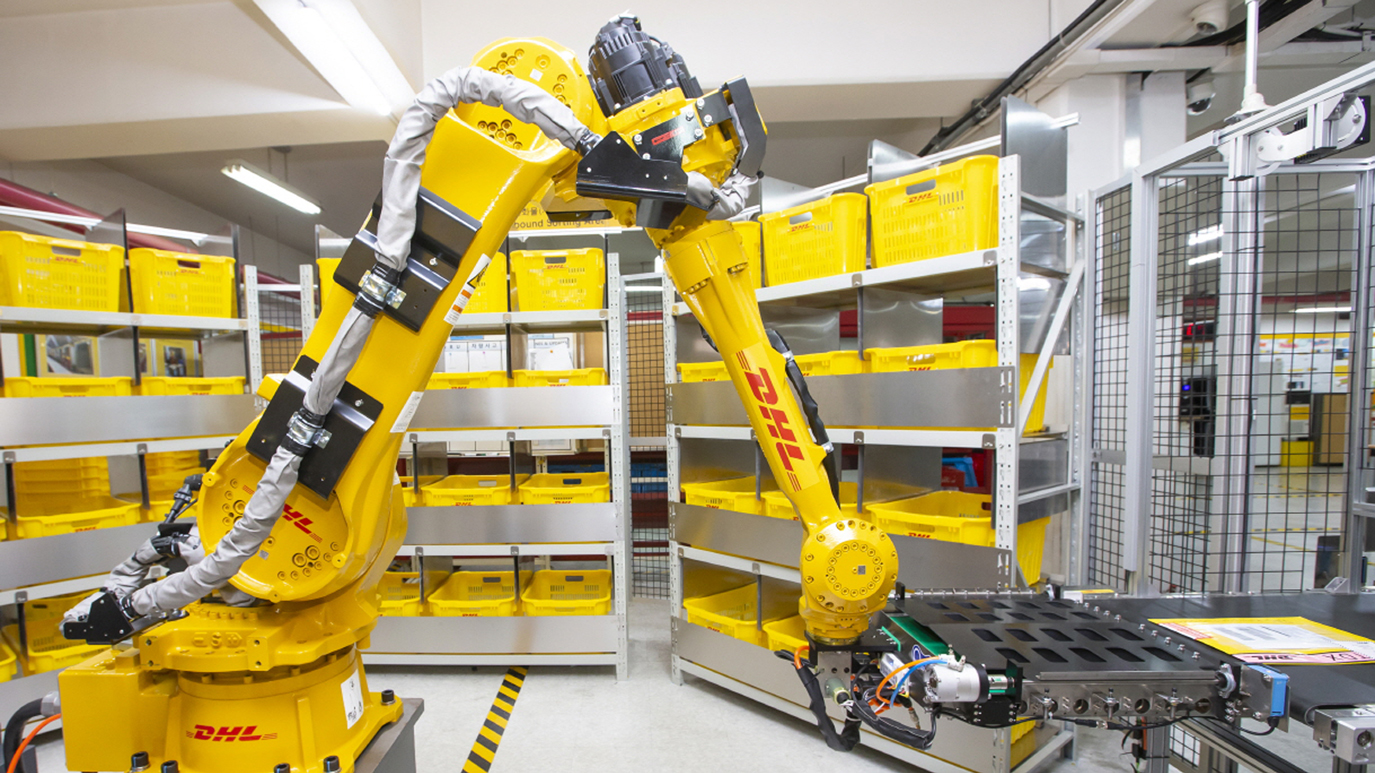
Outside of data (since we’ve talked about it so much), AI can also help to optimize supply chain processes and functions of businesses who need it. Typically, AI is integrated to predict the demand of specific products or items, manage the warehouse inventory, and optimize logistics to make sure shipments are getting delivered on time. This leads to reduced costs, increased efficiency, and improved accuracy. For example, DHL has implemented AI-powered bots, known as “DHLBots,” which sort over 1,000 pieces of small parcels per hour with 99% accuracy, increasing sorting capacity by 40%.
Automation of Routine Tasks
We all want to focus on what provides the highest ROI. Before AI, we’d have to hire an assistant to handle the menial tasks we put on the back burner. Now AI can automate most common day-to-day tasks, such as data entry, scheduling, and even reporting. Tools such as UiPath and Automation Anywhere give businesses AI automation solutions that work to enhance productivity and reduce operational costs.
4. Enhancing Decision-Making with AI Insights
AI for Business Intelligence
Business intelligence tools are a bit undercover when it comes to AI. However, they can be hugely beneficial in helping companies make data-driven decisions. Tools such as Tableau and Sqor use AI to analyze your internal data and generate insights based on that data. At the end of the day, business leaders make better decisions and get promoted, while the company itself profits.
Real-Time Data Analysis
When the data river flows and floods, it’s easy to get lost and lose sight of what's more recent. Real-time data becomes essential when you’re running short sprint campaigns. AI can help provide up-to-date insights by not only tracking the data, but analyzing the historical data you have on hand. This helps. But what helps more is the fact that AI can do this in such a short time… Companies like Uber use real-time analytics to boost user experience, ensure efficient services, edit pricing, and more.
5. Innovating Product and Service Offerings
Picture this: You and the product dev sit down to chat about what new features the app needs. You’re both stumped, because you both agree you’ve exhausted every idea you’ve ever had… Well now you can introduce AI as the third member on your development journey. AI tools can help develop the products, and even help with the ideation stages along the way. By analyzing current market trends, and reviewing all customer feedback, AI can help you keep a competitive edge by staying on top of what’s happening in real-time. The best example is Tesla’s AI-driven approach to developing their autonomous vehicles. More specifically, Tesla leverages data from over 500,000 vehicles worldwide to train its autonomous driving algorithms. While there are still kinks in the hose, this example shows just how much AI can help create innovative solutions and ideas.
Takeaways
AI is here, and no doubt it’s here to stay.
It’s already been a transformative technology that not only offers immense potential in the future for business growth, but has had recent successes to back up these claims. By enhancing customer experiences, optimizing marketing campaigns, making operations more efficient, and helping you push the boundaries of innovation, AI is helping businesses stay competitive, and boost their bottom line in the modern, messy marketplace.
Ready to transform your brand story?
Schedule a free diagnostic to see how we can help.
Schedule The Diagnostic